ESPAÑOL 
 ENGLISH
ENGLISH
 ENGLISH
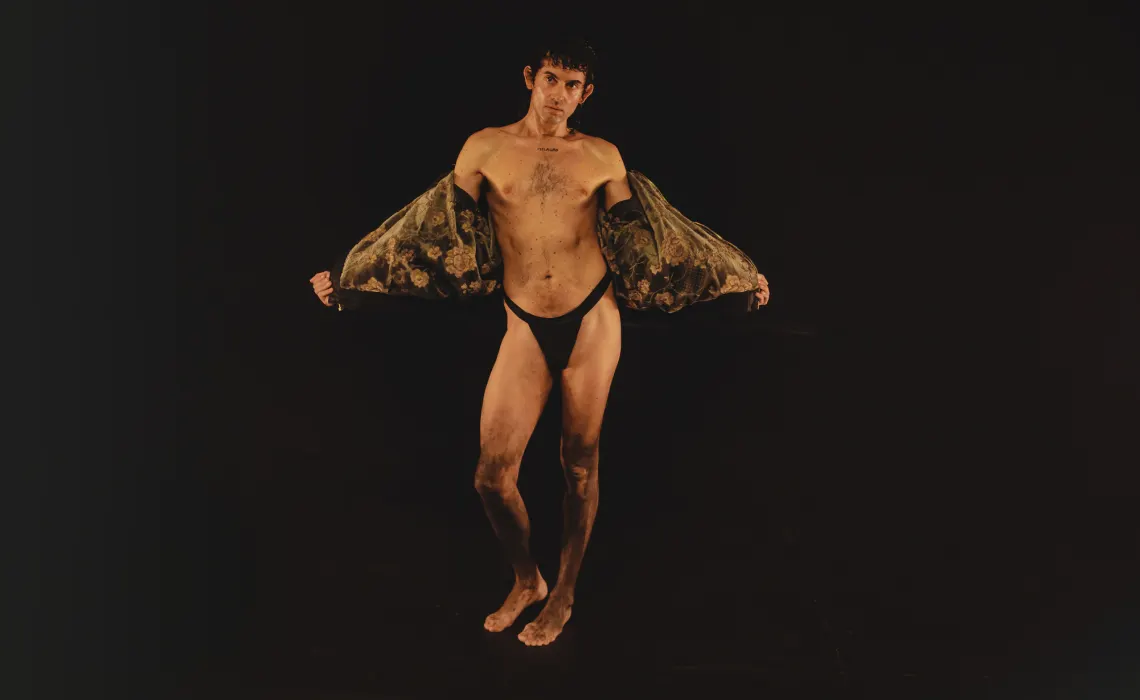
Alberto Cortés, Málaga-borb stage director and performer, has been described by specialist critics as a “theatre enigma” and a “queer bullfighter”. This ties in perfectly with statements made by Cortés himself about his relationship with the stage. “In a way, I hate it, and it is in that struggle that I find my place.” At this year’s Autumn Festival, the struggle that Cortés refers to will be represented by two different plays: Analphabet and Ester’s Heart.
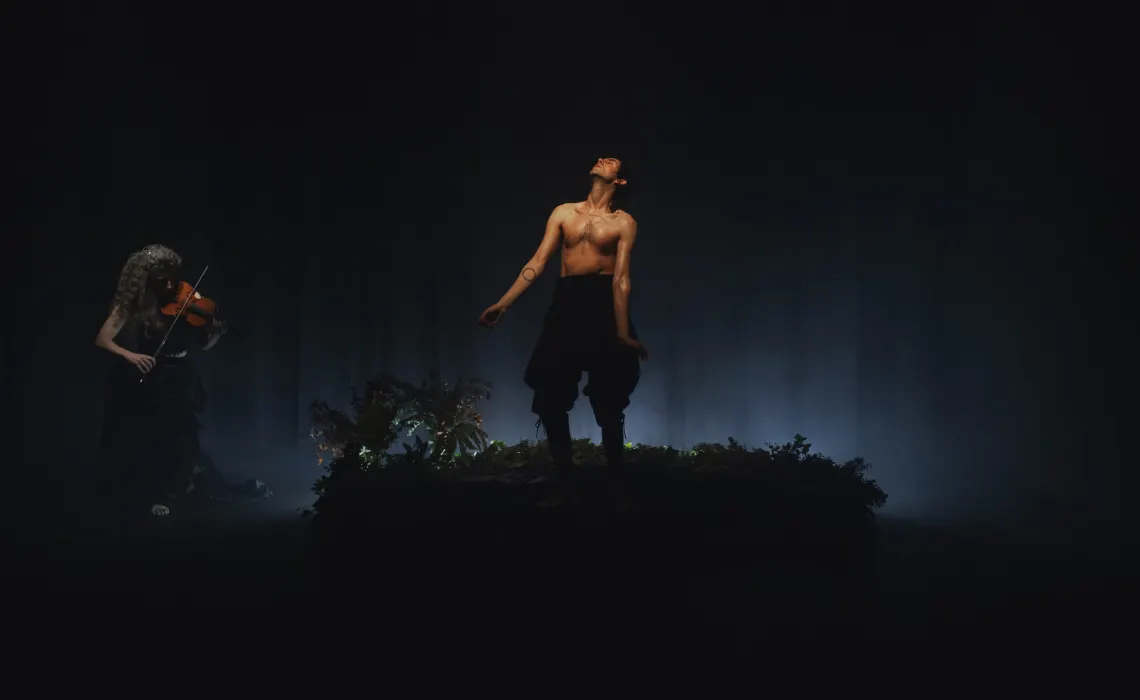
This will also be the last chance to enjoy Analphabet, which brings its tour to a close with this performance in the Sala Verde at the Teatros del Canal.
Two heartbroken lovers weep on Gulpiyuri beach, until a ghost called Analphabet appears over the sea at sunset, telling them stories and singing them songs. A romantic spirit, whose appearance highlights “the chasm we call loversand the mistreatment to which we subject ourselves within that romantic relationship”.
Analphabet is a fictionalised myth that opens the can of worms regarding intra-gender violence. He also acts as a preacher and warns of the difficulty of care in “queer relationships shaped by patriarchal heritage”, according to Cortés.
Although he arrives on his last legs every evening, the ghost harbours a hope: one that depends on poetry and its capacity to heal.
Words and poetry also form the central themes of other works by Alberto Cortés, such as El Ardor and One Night at the Golden Bar. Both have been published in book form under the title The Mountains Are Yours. He subsequently published I Always Come at Night (2024) and Book of Devotions (2026).
In recent years, Cortés has become a regular feature on the programmes of international festivals and theatres such as the Kunstenfestivaldesarts, the Festival d’Automne in Paris and the Milan Triennale.